
The Power of Chasing A Dream
Every day, we chase the miracles of science to improve people’s lives. We apply our deep understanding of the immune system to develop breakthrough innovations in medicines and vaccines so you can focus on what matters most, chasing your dreams. So, if you’re chasing your dreams, remember... you’re not alone. We’re right beside you.
People Stories
People are at the heart of every breakthrough. Across the world, individuals from the lab to the community are redefining what’s possible, whether they’re living with complex conditions, advancing pioneering research or helping deliver care that can transform lives. These stories celebrate the people who continue to chase their dreams despite living with a disease, and Sanofians who chase the miracles of science to make those dreams possible.
We’re inspired by the strength, courage, and hope of these people who remind us why our purpose matters - we chase the miracles of science to improve people’s lives. For some, that means finding new ways to manage chronic diseases. For others, it’s about breaking boundaries in science to bring life-changing solutions to patients faster. Together, their journeys reflect our shared belief that improved health unlocks the potential to make dreams a reality.

Céline, from Diagnosis to World Champion Para-surfer
Diagnosed with secondary progressive multiple sclerosis (SPMS) at 30, Céline — who previously described herself as not "sporty at all" — radically reimagined her life. Despite rapidly progressing symptoms affecting her mobility, she chose to pursue what she loves. Through art, para-surfing, and a deep belief in medical science, Céline transformed despair into a dynamic new chapter. Today, she's not only a thriving artist but also captain of the French para-surfing team and a two-time World Champion. Her incredible journey is a powerful testament to resilience, innovation, and the spirit's ability to turn dreams into reality, one wave at a time.



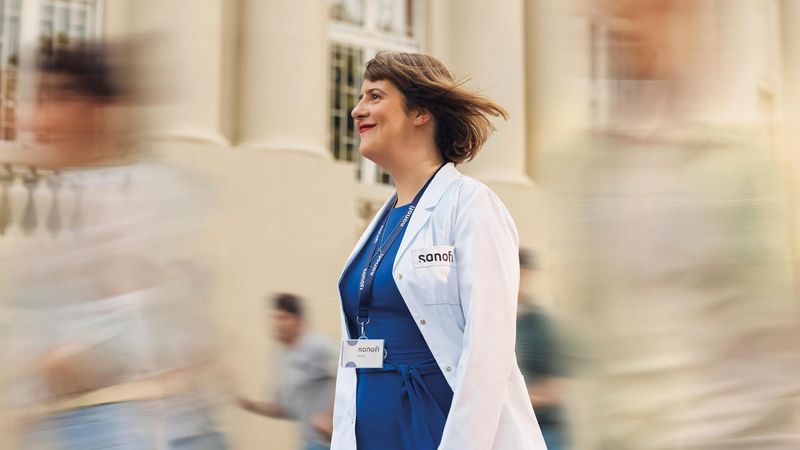




“Having a dream since my diagnosis truly changed my vision of things. Anything is possible.”
Céline, 2x World Champion para-surfer
We Chase the Miracles of Science to Improve People’s Lives
Innovation begins with curiosity, and at Sanofi, that curiosity drives us to chase the miracles of science every day. Across our global research network, thousands of scientists, engineers, and partners are breaking boundaries in science to bring life-changing solutions to patients faster. Guided by one purpose-we chase the miracles of science to improve people’s lives-we are transforming the future of medicine through discovery, technology, and collaboration.
From dermatological and respiratory conditions like atopic dermatitis and chronic obstructive pulmonary disease (COPD) to autoimmune and neurological diseases such as multiple sclerosis and autoimmune type 1 diabetes, we’re chasing the miracles of science to address the root causes of diseases, not just the symptoms, to create lasting change. These breakthroughs exemplify our commitment to deliver high-quality, affordable, sustainable medicines and vaccines to those who need them most, ensuring innovation translates into real-world impact. We chase the miracles of science for a healthier, more resilient world, harnessing cutting-edge science, technology, and human insight to shape a better future for generations to come.
Every discovery at Sanofi is a step toward a healthier, more hopeful future. Health unlocks the potential to make dreams a reality, and through innovation, we’re helping people around the world do just that
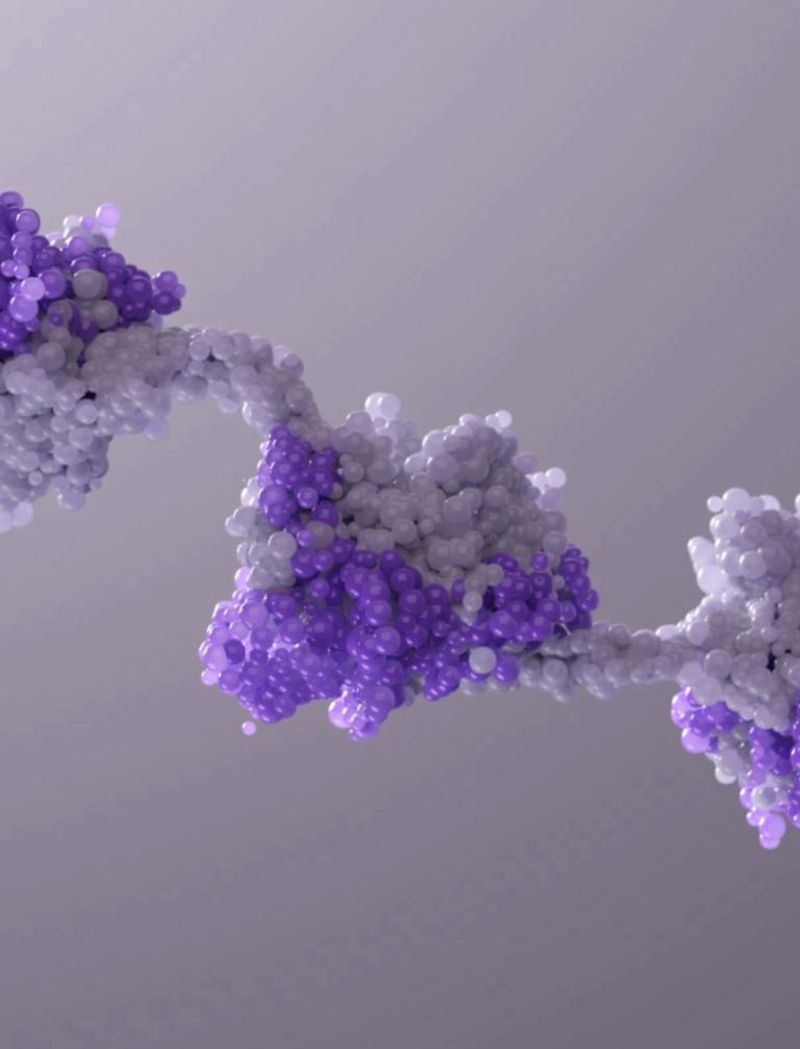
Revolutionizing Autoimmune Type 1 Diabetes Care
For over a century, type 1 diabetes (T1D) treatment has focused on insulin replacement. However, for 9.2 million people worldwide, T1D demands constant, daily management.1-3 Recent scientific breakthroughs reveal that T1D is an autoimmune disease where the body's immune system mistakenly attacks insulin-producing cells.4 This new understanding opens the door to a revolutionary approach. Instead of solely replacing insulin, our science is now focused on intercepting the disease early. By targeting the immune system's T cells, we aim to protect vital insulin-producing cells, slowing or even halting disease progression. This could provide more time before clinical diabetes onset and significantly reduce the lifelong burden of managing T1D. We're leading a new era in T1D care, striving to prevent its natural progression, with the ultimate hope of one day stopping it altogether.
References
-
International Diabetes Federation. Type 1 Diabetes. Available at https://idf.org/about-diabetes/types-of-diabetes/type-1-diabetes/. Last accessed: September 2025.
-
Parkkola A, Härkönen T, Ryhänen SJ, Ilonen J, Knip M; Finnish Pediatric Diabetes Register. Extended family history of type 1 diabetes and phenotype and genotype of newly diagnosed children. Diabetes Care. 2013 Feb;36(2):348-54.
-
PhD, Aaron Breedlove. “The Mental Health Effects of Type 1 Diabetes.” Osu.edu, The Ohio State University, 13 June 2025, health.osu.edu/health/mental-health/managing-diabetes-and-mental-health.
-
Diabetes. Beta Cells. Available at: https://www.diabetes.co.uk/body/beta-cells.html. Last accessed: September 2025.
-
Global burden of 288 causes of death and life expectancy decomposition in 204 countries and territories and 811 subnational locations, 1990–2021: a systematic analysis for the Global Burden of Disease Study 2021. Naghavi, Mohsen et al. The Lancet, Volume 403, Issue 10440, 2100 – 2132.
-
Association, American Lung. COPD Trends Brief - Burden, American Lung Association, www.lung.org/research/trends-in-lung-disease/copd-trends-brief/copd-burden. Accessed September 2025
-
Chen, Simiao, et al. "The global economic burden of chronic obstructive pulmonary disease for 204 countries and territories in 2020–50: a health-augmented macroeconomic modelling study." The Lancet Global Health 11.8 (2023): e1183-e1193.
-
Mathioudakis, Alexander G., Sachin Ananth, and Jørgen Vestbo. "Stigma: an unmet public health priority in COPD." The Lancet Respiratory Medicine 9.9 (2021): 955-956.
-
Oh JY, Sin DD. Lung inflammation in COPD: why does it matter? F1000Research. 2012;4:23.
-
Yun JH, Lamb A, Chase R, et al; COPDGene and ECLIPSE Investigators. Blood eosinophil count thresholds and exacerbations in patients with chronic obstructive pulmonary disease. J Allergy Clin Immunol. 2018;141(6):2037-2047.e10. doi:10.1016/j.jaci.2018.04.010
-
Bélanger M, Couillard S, Courteau J, et al. Eosinophil counts in first COPD hospitalizations: a comparison of health service utilization. Int J Chron Obstruct Pulmon Dis. 2018;13:3045-3054.
-
National Institutes of Health (NIH). Health Topics: Atopic Dermatitis. Available at: https://www.niams.nih.gov/health-topics/atopic-dermatitis. Last accessed September 2025.
-
Zuberbier T et al. Patient perspectives on the management of atopic dermatitis. J Allergy Clin Immunol. 2006 Jul;118(1):226-32.
-
Piedimonte G, et al. Pediatr Rev. 2014;35(12):519-530.
-
Carvajal JJ, et al. Front Immunol. 2019;10:2152.
-
U.S. Centers for Disease Control and Prevention. “Explaining How Vaccines Work.” https://www.cdc.gov/vaccines/basics/explaining-how-vaccines-work.html Accessed September 2025.
-
Simon AK, Hollander GA, McMichael A. 2015 Evolution of the immune system in humans from infancy to old age. Proc. R. Soc. B 282: 20143085. http://dx.doi.org/10.1098/rspb.2014.3085
-
National Institutes of Health. What are mRNA vaccines and how do they work? https://medlineplus.gov/genetics/understanding/therapy/mrnavaccines/Accessed September 2025
-
Giovannoni G, Popescu V, Wuerfel J, et al. Smouldering multiple sclerosis: the ‘real MS’. Ther Adv Neurol Disord. doi:10.1177/17562864211066751
-
Frisch ES, Pretzsch R, Weber MS. A Milestone in Multiple Sclerosis Therapy: Monoclonal Antibodies Against CD20—Yet Progress Continues. Neurotherapeutics. 2021;18:1602-1622.
-
Häusser-Kinzel S, Weber MS. The role of B cells and antibodies in multiple sclerosis, neuromyelitis optica, and related disorders. Front Immunol. 2019;10:201.