
What is RSV?
Parenthood is full of big decisions, and the safety and health of your little one play a big role in making them.
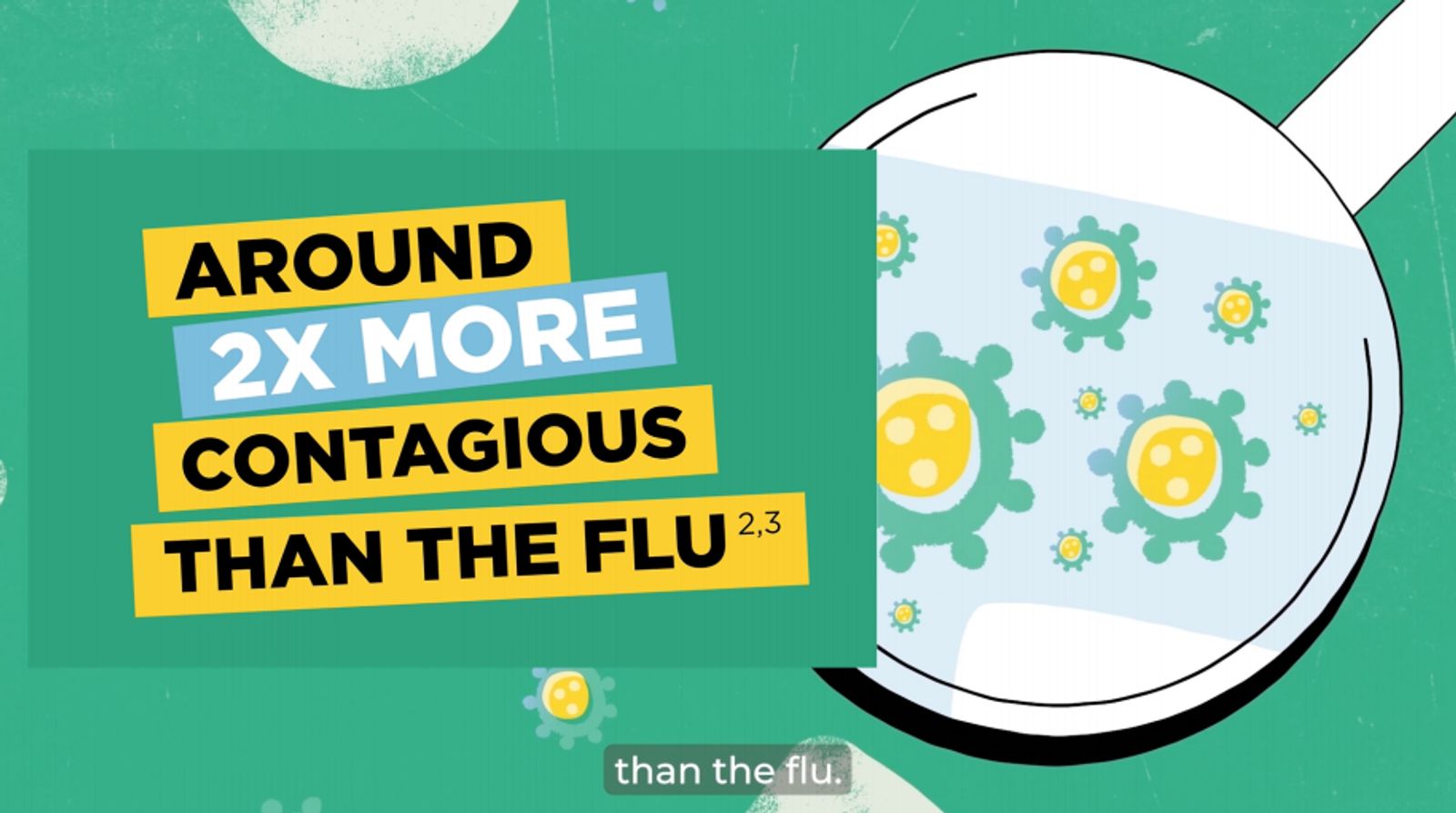
That's why it's important that you know about respiratory syncytial virus (RSV).
RSV is a respiratory virus, which means it affects the airways and lungs.1
While most cases of RSV disease are mild, all babies are at risk of lung infections such as bronchiolitis or pneumonia if they catch RSV.2,3
Understanding how RSV can affect a baby
Here, you'll discover:
- Why all babies are at risk
- What you can do to prepare for RSV season
- Parents' experiences with RSV
- Helpful support and resources
So, whether it's the first time learning about RSV or simply looking for more information, many resources are available that can be helpful.
RSV in babies
Around 2 in 3 babies will catch RSV before their first birthday.4
For most babies, an RSV infection will cause mild symptoms such as a runny nose, coughing, sneezing, and congestion.*,2,5
But for some babies, it can get worse and lead to more severe symptoms, which might mean a stay in hospital is needed.3 In fact, RSV is a leading cause of hospitalisations in babies under a year old.6-8
*A baby may not experience all of the symptoms described here. The symptoms shown can also occur with other infections and this is not a complete list, others can occur.
Whenever you are concerned about a child's health, always seek medical advice.
Who can get RSV?
People of all ages can get RSV.9 However, certain groups including babies, the elderly, and people with health conditions are more at risk of getting a severe illness if they get infected.9
While RSV often causes a mild illness, in some cases it can become more severe.2,5 Even a baby born healthy and at full term is still at risk of being hospitalised in their first year, if they catch RSV.3,7,10,11
Why are all babies at risk of RSV?
During their first year of life, babies have very small, fragile lungs, and their immune systems continue to mature and develop after their first year.1,12-15
This can make them more vulnerable to serious illness due to an RSV infection, compared to older children and adults.1,12-14

Why should you care about RSV?
Even though most babies will recover from RSV disease at home, you should be aware of RSV because it can progress from a mild illness to a severe one within a matter of days.16
In fact, almost 1 in 10 cases in children under 2 years progress to lung infections, such as bronchiolitis or pneumonia.17
It's also difficult to predict which babies will get seriously ill and require hospital care after becoming infected.7,11

Download the RSV fact sheet
Learn more today. It might take a world of difference.

Understanding RSV
Click here to learn more about how RSV poses a risk for babies.
Footnotes & references
RSV, respiratory syncytial virus.
- Pickles RJ, DeVincenzo JP. Respiratory syncytial virus (RSV) and its propensity for causing bronchiolitis. J Pathol. 2015;235(2):266-276
- Piedimonte G, Perez MK. Respiratory syncytial virus infection and bronchiolitis [published correction appears in Pediatr Rev. 2015 Feb;36(2):85.
- Hall CB, Weinberg GA, Iwane MK, et al. The burden of respiratory syncytial virus infection in young children. N Engl J Med. 2009;360(6):588-598.
- Walsh EE. Respiratory Syncytial Virus Infection: An Illness for All Ages. Clin Chest Med. 2017;38(1):29-36.
- Meissner HC. Viral Bronchiolitis in Children. N Engl J Med. 2016;374(1):62-72
- Moyes J, Walaza S, Mkhencele T, et al. The burden of RSV-associated illness in children aged <5 years, South Africa, 2011–2016. BMC Med. 2023;21(1):139
- Demont C, Petrica N, Bardoulat I, et al. Economic and disease burden of RSV-associated hospitalizations in young children in France, from 2010 through 2018 [published correction appears in BMC Infect Dis. 2023 Feb 27;23(1):122.
- Suh M, Movva N, Jiang X, et al. Respiratory Syncytial Virus Is the Leading Cause of United States Infant Hospitalizations, 2009-2019: A Study of the National (Nationwide) Inpatient Sample. J Infect Dis. 2022;226(Suppl 2):S154-S163
- Du Y, Yan R, Wu X, et al. Global burden and trends of respiratory syncytial virus infection across di erent age groups from 1990 to 2019: A systematic analysis of the Global Burden of Disease 2019 Study. Int J Infect Dis. 2023;135:70-76.
- Arriola CS, Kim L, Langley G, et al. Estimated Burden of Community-Onset Respiratory Syncytial Virus-Associated Hospitalizations Among Children Aged <2 Years in the United States, 2014-15. J Pediatric Infect Dis Soc. 2020;9(5):587-595.
- Bianchini S, Silvestri E, Argentiero A, Fainardi V, Pisi G, Esposito S. Role of Respiratory Syncytial Virus in Pediatric Pneumonia. Microorganisms. 2020;8(12):2048. Published 2020 Dec 21
- Hussain M, Xu C, Lu M, Wu X, Tang L, Wu X. Wnt/β-catenin signaling links embryonic lung development and asthmatic airway remodeling. Biochim Biophys Acta Mol Basis Dis. 2017;1863(12):3226-3242
- Lambert L, Sagfors AM, Openshaw PJ, Culley FJ. Immunity to RSV in Early-Life. Front Immunol. 2014;5:466. Published 2014 Sep 29.
- Di Cicco M, Kantar A, Masini B, Nuzzi G, Ragazzo V, Peroni D. Structural and functional development in airways throughout childhood: Children are not small adults. Pediatr Pulmonol. 2021;56(1):240-251.
- Simon AK, Hollander GA, McMichael A. Evolution of the immune system in humans from infancy to old age. Proc Biol Sci. 2015;282(1821):20143085.
- Smyth RL, Brearey SP. BRONCHIOLITIS. Encyclopedia of Respiratory Medicine. 2006;268-275.
- Langley JM, Bianco V, Domachowske JB, et al. Incidence of Respiratory Syncytial Virus Lower Respiratory Tract Infections During the First 2 Years of Life: A Prospective 14.Study Across Diverse Global Settings. J Infect Dis. 2022;226(3):374-385.