
While well-established in clinical research, alpha-1 antitrypsin deficiency (Alpha-1) — also sometimes called AATD — often goes unrecognized and remains significantly underdiagnosed despite it being a genetic cause of emphysema, a common and serious form of chronic obstructive pulmonary disease (COPD).1-3
For people living with Alpha-1-related emphysema, symptoms can include wheezing, fatigue, and recurring infections, which, as the disease progresses, may greatly limit quality of life.4,5 In the most severe forms of the disease, people with Alpha-1 may ultimately require a lung transplant, and some individuals may also experience liver complications due to the condition.4,6
Understanding the biology behind this complex genetic condition can help provide important insight into how it affects the lungs, potentially helping to pave the way for earlier diagnosis and more informed patient care.
Some Background on Alpha-1



The Role of AAT in Helping to Protect the Lungs
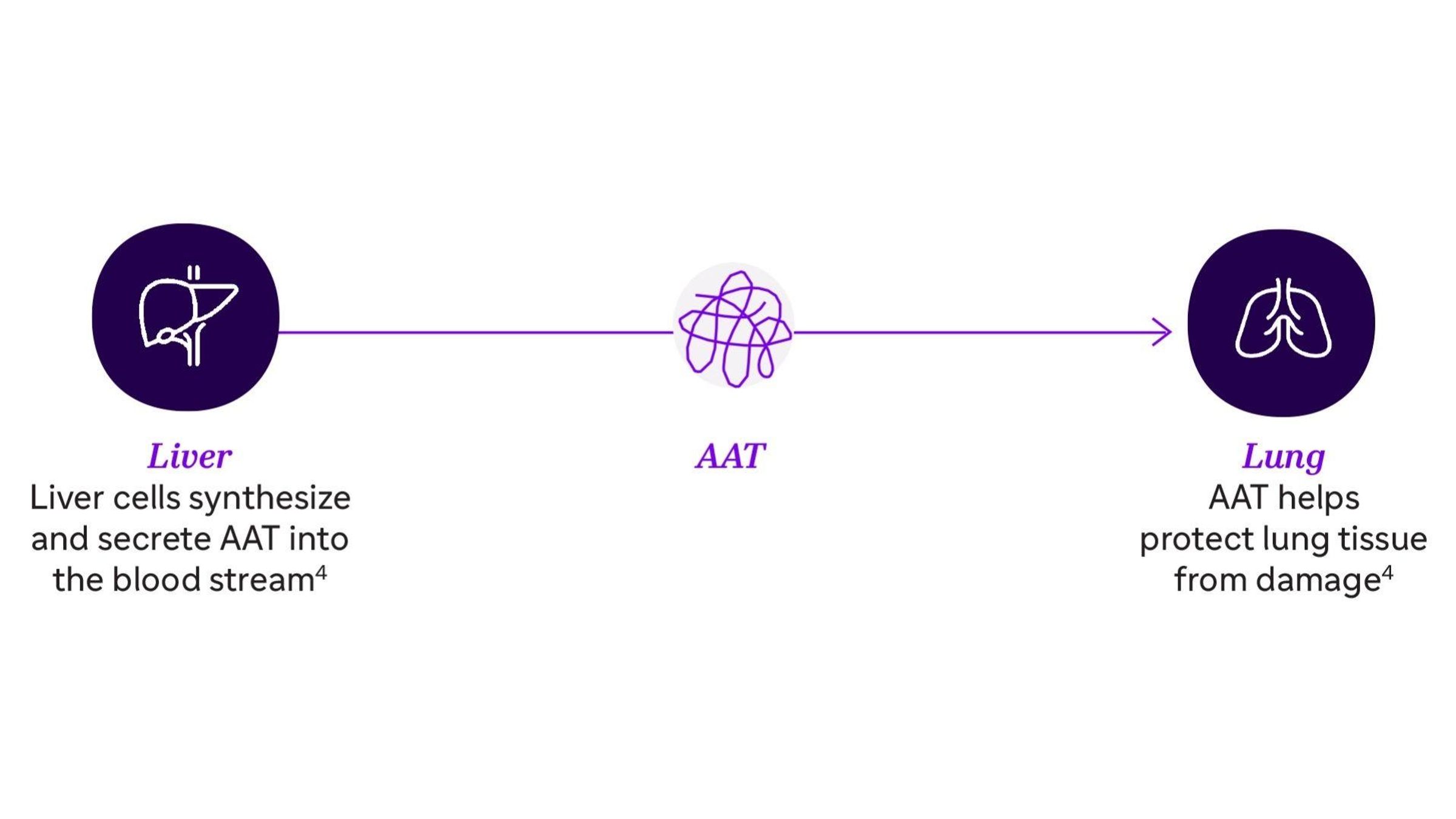
Alpha-1 is characterized by low levels or absence of a protective protein called alpha-1 antitrypsin (AAT).4 The liver makes and releases this protein into the bloodstream, and it helps to protect the lungs so they can function.4
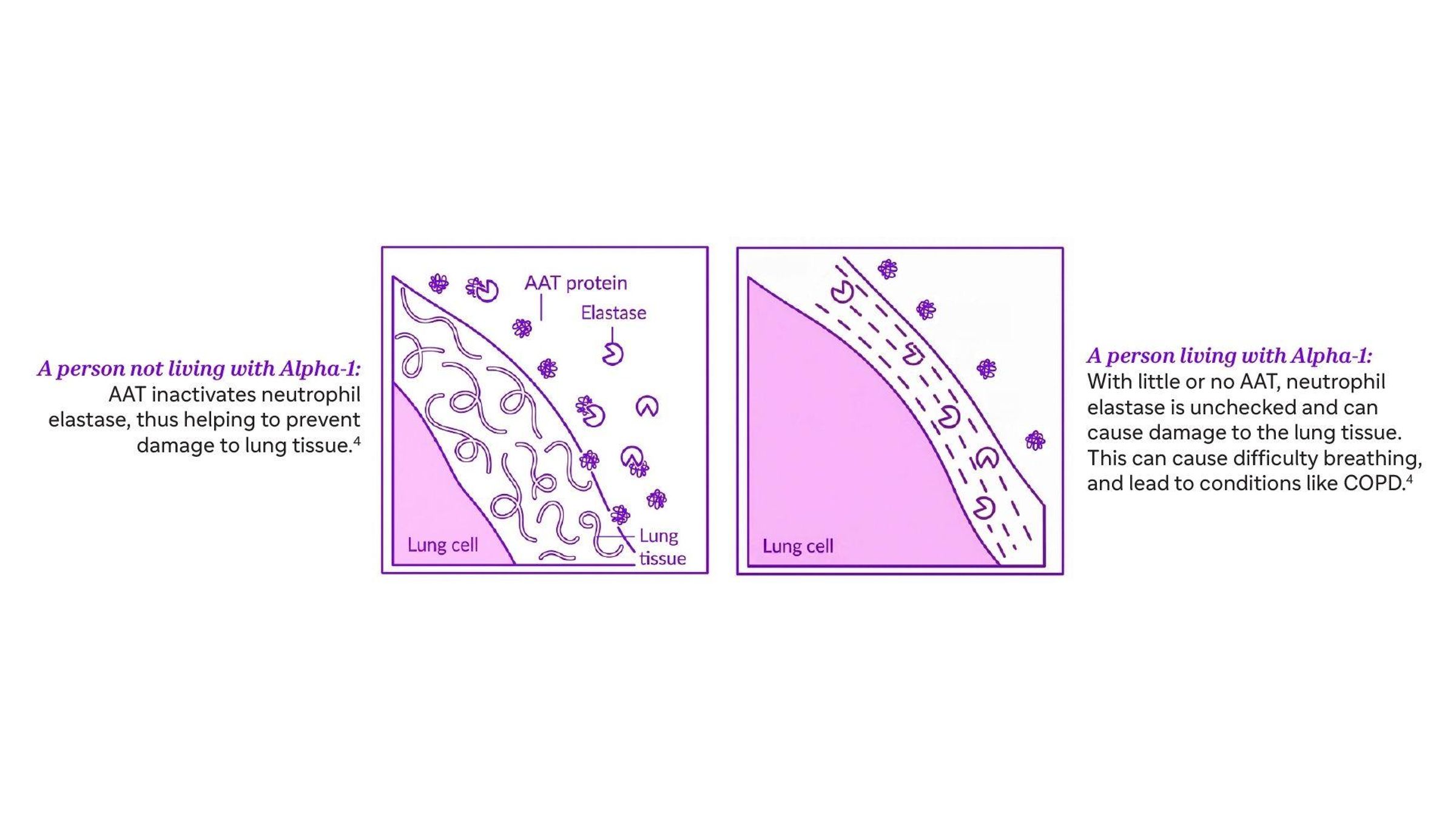
Normally, when our lungs encounter infections or irritants, the body mounts an inflammatory response that recruits neutrophils, a type of white blood cell, to the site of damage, which release neutrophil elastase.4,8 While neutrophil elastase is helpful for fighting infections, these enzymes can also erroneously attack healthy lung tissue. AAT acts as a crucial shield for the lungs.4 Most people have sufficient levels of AAT in the body to block neutrophil elastase and help keep the lungs protected from tissue damage.4,8
However, in people with Alpha-1 disease, neutrophil elastase is left unchecked because their bodies do not produce proper levels of AAT.4 This can leave people with Alpha-1 more vulnerable to damage, increasing their risk of irreversible progressive lung disease.4,9,10 Over time, this lack of protection can lead to structural deterioration of lung tissue, difficulty breathing, and severe respiratory conditions, like emphysema and COPD.4,8
A Closer Look at AAT Levels
For decades, plasma-derived augmentation therapy has been a standard approach for Alpha-1 care, intended to raise AAT levels in the lungs and bloodstream.9,10 Historically, total AAT serum level of less than or equal to 11 µM has been recognized as a marker for increased risk of lung disease.11,12 However, other research suggests that this risk may begin earlier, when a person’s AAT levels fall below normal levels, which in healthy individuals is 20 µM, especially when coupled with other environmental or lifestyle factors.4,12,13
AAT levels can be measured in different ways; by assessing the total concentration of AAT in the body (total AAT) or by evaluating active AAT levels (functional AAT).11
- Total AAT serum levels are the total concentration of AAT in the blood, regardless of its activity.14
- Functional AAT levels are the active AAT capable of blocking neutrophil elastase that can cause tissue damage.14
While total serum AAT levels are commonly evaluated as part of Alpha-1 diagnosis and care, the exploration of functional AAT levels in combination with this common clinical practice may help build a more complete understanding of disease progression.14
Advancing Understanding of Alpha-1
The more we advance awareness and understanding of Alpha-1 and the role of AAT levels, the more we can collectively help support earlier recognition, diagnosis, and informed conversations around disease management.
Continued research and collaboration across the Alpha-1 community are helping expand understanding of this complex condition and the unmet needs that remain for people living with Alpha-1. Through our deep-rooted heritage in rare and respiratory diseases, we are committed to advancing research and pursuing new possibilities for people with Alpha-1.
Explore More
The Cause of COPD You Don't Know: Alpha-1 Antitrypsin Deficiency
About Rare Diseases
Addressing Unmet Needs in Respiratory Care
References
- Pfeffer DN, Dhakne R, El Massad O, et al. Improving the Likelihood of Identifying Alpha-1 Antitrypsin Deficiency Among Patients With COPD: A Novel Predictive Model Using Real-World Data. Chronic Obstr Pulm Dis. 2025;12(1):1-11.
- Aboussouan L, Stoller JK. Detection of alpha-1 antitrypsin deficiency: a review. Respir Med.2009;103(3):335-41.
- Learn About Alpha-1 Antitrypsin Deficiency. American Lung Association website. https://www.lung.org/lung-health-diseases/lung-disease-lookup/alpha-1-antitrypsin-deficiency/learn-about-alpha-1-antitrypsin-defiency. Updated January 2026. Accessed July 2026.
- Alpha-1 antitrypsin deficiency. MedlinePlus Genetics website. https://medlineplus.gov/genetics/condition/alpha-1-antitrypsin-deficiency/. Accessed July 2026.
- Alpha-1 Antitrypsin Deficiency Symptoms and Diagnosis. American Lung Association website. https://www.lung.org/lung-health-diseases/lung-disease-lookup/alpha-1-antitrypsin-deficiency/symptoms-diagnosis. Accessed July 2026.
- Zamora M, Ataya A. Lung and liver transplantation in patients with alpha-1 antitrypsin deficiency. Ther Adv Chronic Dis. July 2021;12_suppl:20406223211002988.
- Smith G, Singh K Alpha-1 Antitrypsin Deficiency CHEST, 166, 1288-1290.
- Xiang S, Yang L, He Y, et al. Alpha-1 Antitrypsin as a Regulatory Protease Inhibitor Modulating Inflammation and Shaping the Tumor Microenvironment in Cancer. Cells. January 2025;14(2):88.
- Wells AD, Woods A, Hilleman DE, et al. Alpha-1 Antitrypsin Replacement in Patients With COPD. PT. July 2019;44(7):412–415.
- Treating and Managing Alpha-1 Antitrypsin Deficiency. American Lung Association website. https://www.lung.org/lung-health-diseases/lung-disease-lookup/alpha-1-antitrypsin-deficiency/treating-and-managing. Accessed July 2026.
- Brantly ML, Kuhn BT, Farah HW, et al. Recombinant Alpha-1 Antitrypsin–Fc Fusion Protein INBRX-101 in Adults With Alpha-1 Antitrypsin Deficiency: A Phase 1 Study. Chronic Obstr Pulm Dis. June 2024;11(3):282–292.
- Franciosi AN, Fraughen D, Carroll TP, et al. Alpha-1 antitrypsin deficiency: clarifying the role of the putative protective threshold. Eur Respir J. February 2022;59(2):2101410.
- Mulkareddy V, Roman J. Pulmonary manifestations of alpha 1 antitrypsin deficiency. Am J Med Sci. July 2024;368(1):1-8.
- Li Z, Franke RM, Morris DN, et al. Pharmacokinetics and Biochemical Efficacy of an α1-Proteinase Inhibitor (Aralast NP) in α1-Antitrypsin Deficiency: a Cross-Product Retrospective Comparability Analysis. Pulm Ther. August 2022;8(3):311–326.