Coastal clean-up, Waterford, Ireland
Coastal clean-up, Waterford, Ireland
Environmental Impact
We’re minimizing the environmental impact of our products and activities across our value chain while adapting our business to environmental changes, and strengthening the resilience of healthcare systems.
Peoples’ health and the environment are inextricably linked. At Sanofi, our dedication to improving people’s lives goes beyond developing life-changing medicines and vaccines: it encompasses our contribution to the environment and the society. We’ve set clear goals and are mobilizing our employees and partners to join us in taking action for the planet.
Fighting Climate Change
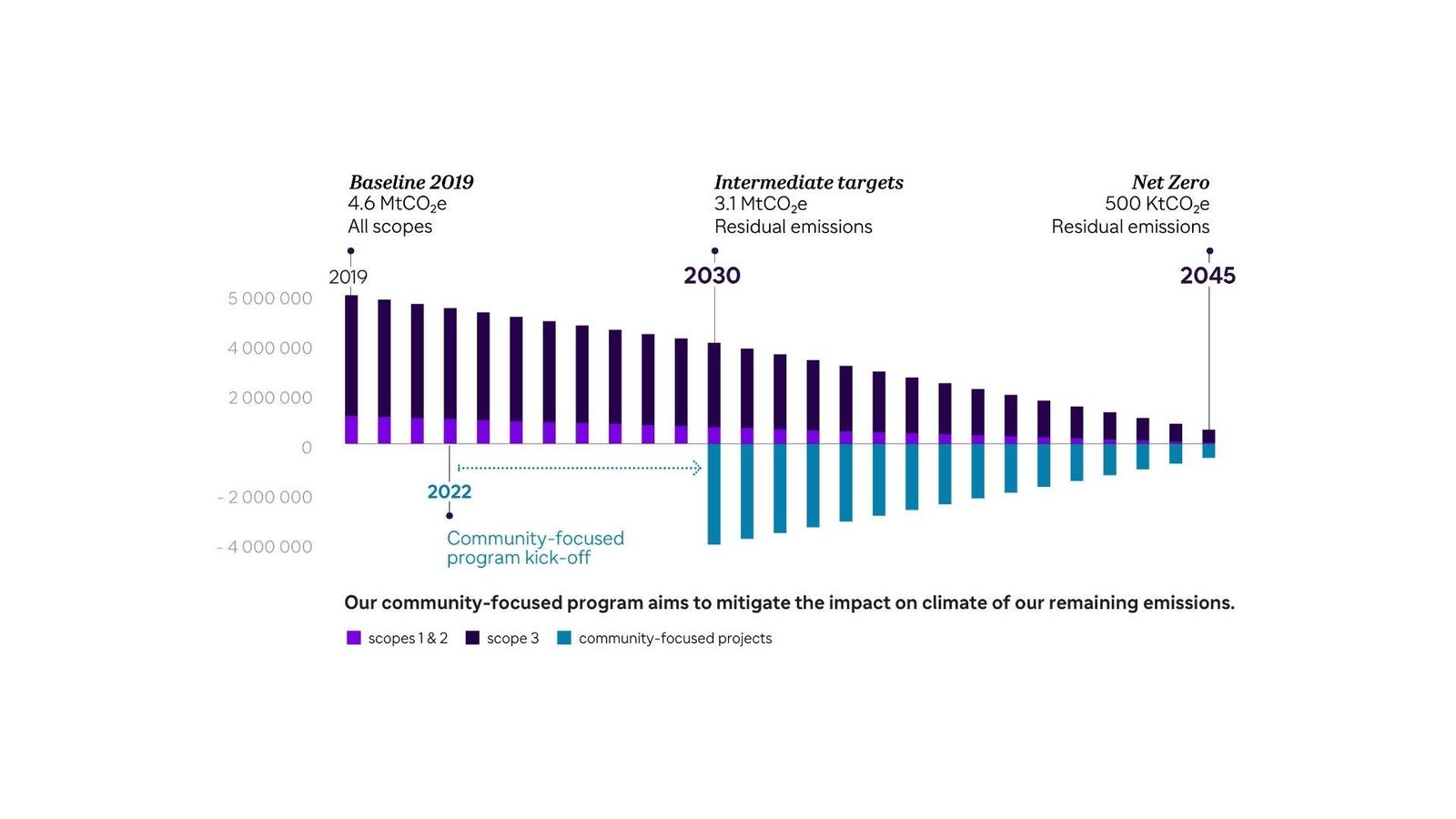
As a healthcare company, we understand the urgency of addressing climate change. We’re committed to the United Nations’ Race to Zero initiative, taking bold action to mitigate climate change. We aim for net zero greenhouse gas emissions by 2045 (all scopes).
Our strategy focuses on a 90% reduction in emissions across our value chain by 2045 (vs. 2019) while mitigating our remaining emissions’ impact on climat through high-impact, community-centered projects, ensuring the highest standards of integrity and social impact.
We’re adopting an approach that combines energy efficiency (consume less, consume smarter), with decarbonization of our energy supplies (consume differently).
We’re making progress on our action plans to reduce greenhouse gas (GHG) emissions from our activities (scopes 1 & 2) with a target of 55% by 2030, and help our partners reduce GHG emissions (scope 3) with the goal of reaching 30% by 2030.
Progress for which we’ve been recognized among the leadership band on the CDP for our commitment, actions and transparency on climate change for the fifth consecutive year.
Limiting Our Impact on Nature
Our ambition for nature focuses on optimizing and turning waste into resources, thinking of water as a valuable local resource, and preserving biodiversity through global and local actions.
Our circular economy ambition places waste reduction and circularity at its heart. Firstly, our operational waste objective is to reduce our waste index by 30% by 2030 vs. 2019, which is a performance indicator that monitors our efforts on waste reduction and end-of-life environmental impact minimization according to the waste treatment hierarchy. To achieve this goal, we have banned landfilling (<1%) and we aim to further transition from incineration towards reuse or recycling of valuable materials. Secondly, our post-consumer waste approach relies on greater circularity through packaging & device design for reuse & recycling, with device Take-back programs as flagship.
By 2030, we’ve set clear targets to sustain our water withdrawals at 15% less than 2019, ensuring we use this vital resource even more efficiently. Acknowledging that water challenges are specific to each watershed and need to be addressed at local level, we are implementing water efficiency management plans supplemented by context-based targets on all our manufacturing sites by 2030, with a priority on water-stressed areas.
We have also adopted a proactive approach to minimize the potential impacts of pharmaceuticals in the environment on aquatic systems. Consistent with Sanofi’s commitment to monitor, manage and reduce pharmaceutical residues in wastewater globally, 100% of identified priority manufacturing sites are being upgraded with best available wastewater treatment technologies.
By 2030, all our sites located near biodiversity sensitive areas will have developed specific biodiversity management plans, which have already been implemented for all of our highest priority sites. Our ambition now includes as well sourcing priority raw materials from deforestation-free sources.
Innovating With Purpose

Eco-design
We are reimagining the future of healthcare through an Eco-design approach that embeds environmental sustainability at every stage of our products’ life cycle.
From 2025, all new medicines and vaccines adopt this approach, extending to our 20 top-selling products by 2030.
With Eco-design, we are evaluating and improving our products' environmental footprint across their entire value chain - from raw material extraction and transformation, to manufacturing, all the way up to distribution and the product end-of-life treatment.

Through the Patient Journey
As healthcare systems have significant impacts on the environment, we support their reduction related to the use of our products. We also contribute to transform delivery and standards of care to better address patients’ needs while minimizing the environmental impacts. Here, we are increasing our collaborations to generate and analyze data required to understand how our treatments can help decarbonize the patient care pathway. We are also contributing to coordinated and collective international initiatives that reduce entire healthcare systems’ environmental footprints and improve their resilience.
Adapting Our Business and Value Chain to Complex Environmental Challenges
Climate change and nature loss can pose both risks and opportunities to the business in the short, mid and long term. Therefore, we are collectively working to adapt our business to the environmental challenges which could impact our ability to support our patients. This includes mitigating the dependencies on natural resources and effects of climate change on our activities and human health.

Collaborating for Greater Impact
We know that progress is only possible through the collective power of our people and partners, united by the desire to make an impact. We’re taking action as one company, and empowering people to do more to protect the planet. Every year, we invest €3 million in turning our employees’ ideas for sustainability into solutions that work.
As part of this commitment, we’ve also joined forces with My Green Lab—the world’s leading sustainability certification program for laboratories—to make our research spaces more sustainable and more efficient. Through this partnership, we’re joining a global community and collective action embedding environmental responsibility into every stage of the scientific process, reducing energy, water, waste and resource use while advancing science that supports both people and the planet.
Environmental Impact Factsheets
Biodiversity
Circular Economy and Waste Management
Climate
Downstream Emissions to the Environment
Eco-design
HSE Management System & Certifications
Industrial Emissions to the Environment
Soil and Groundwater Remediation
Water
Stronger Together
These are some of the global initiatives we're engaged with.
RE100 Climate Group
Act4nature
Race to Zero
Science-Based Targets
Alliance for Water Stewardship
Transforming Our Ambition Into Action
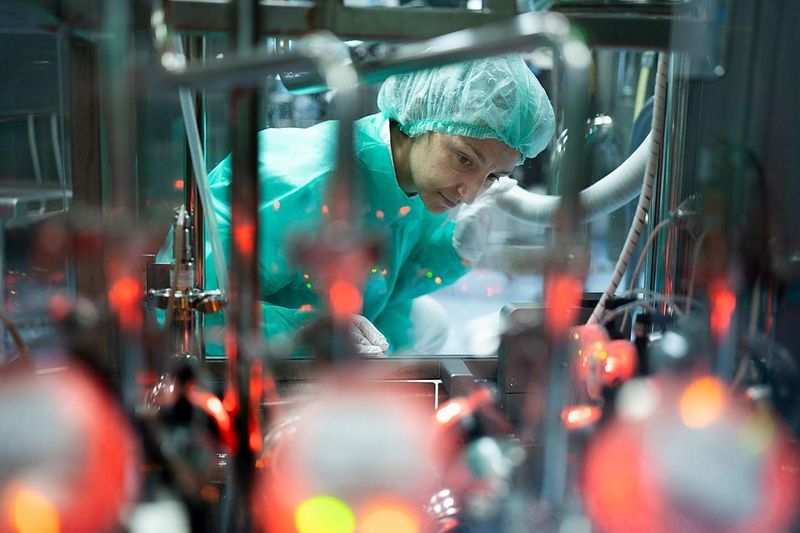
Greener Science for a Healthier Planet: Sanofi & My Green Lab
How can cutting-edge research go hand in hand with environmental responsibility? At Sanofi, the answer is to embed environmental sustainability into every step of the scientific process.